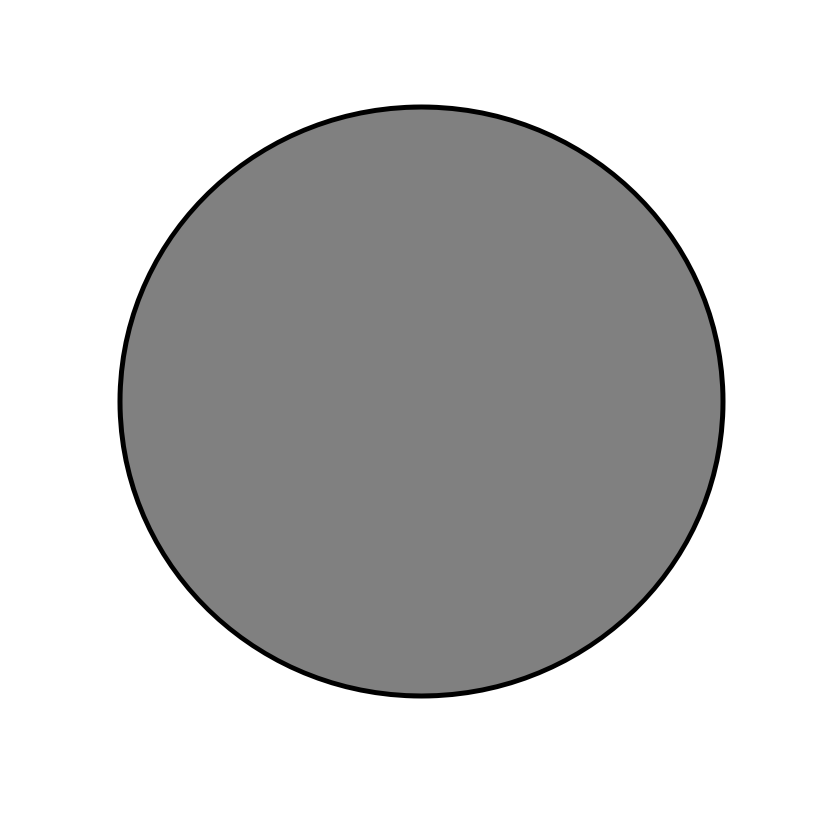
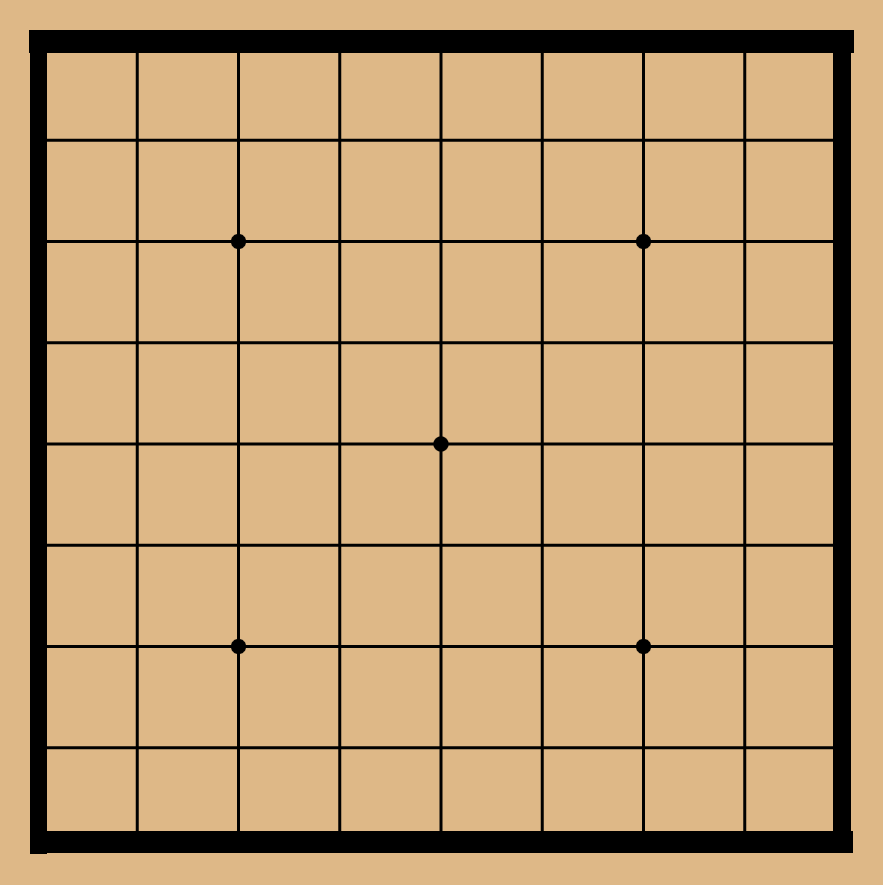
Topologically, a standard game of Go takes place on a closed disk. The board is finite and bounded on all sides by edges. This means that some points on the board have more connections than others: a stone placed in the center of an empty board has four liberties, but one placed in the corner only has two.
| |
|
|---|---|
| A closed disk. | A standard 9x9 go board. The thick black lines indicate hard edges. |
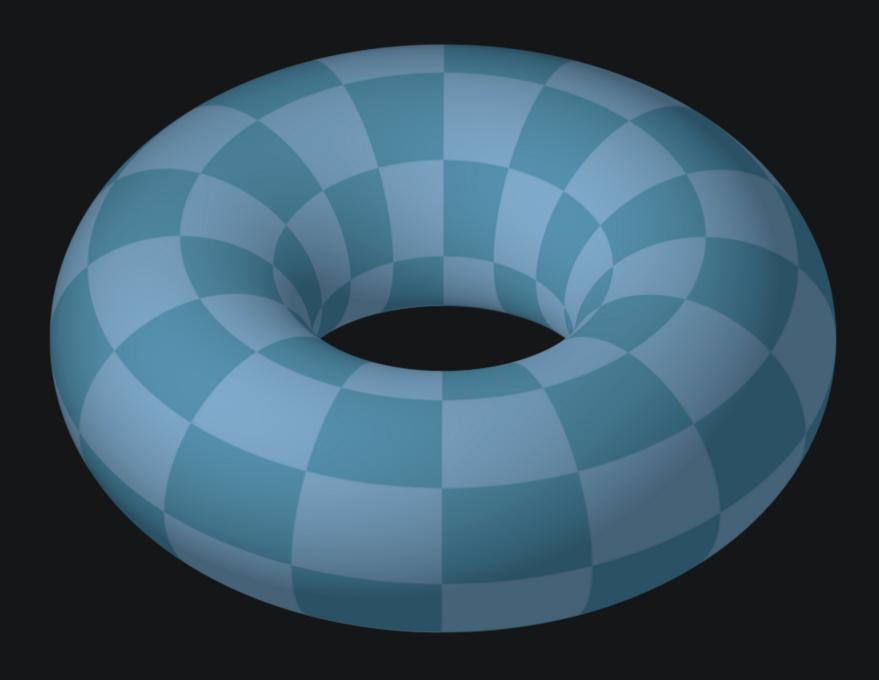
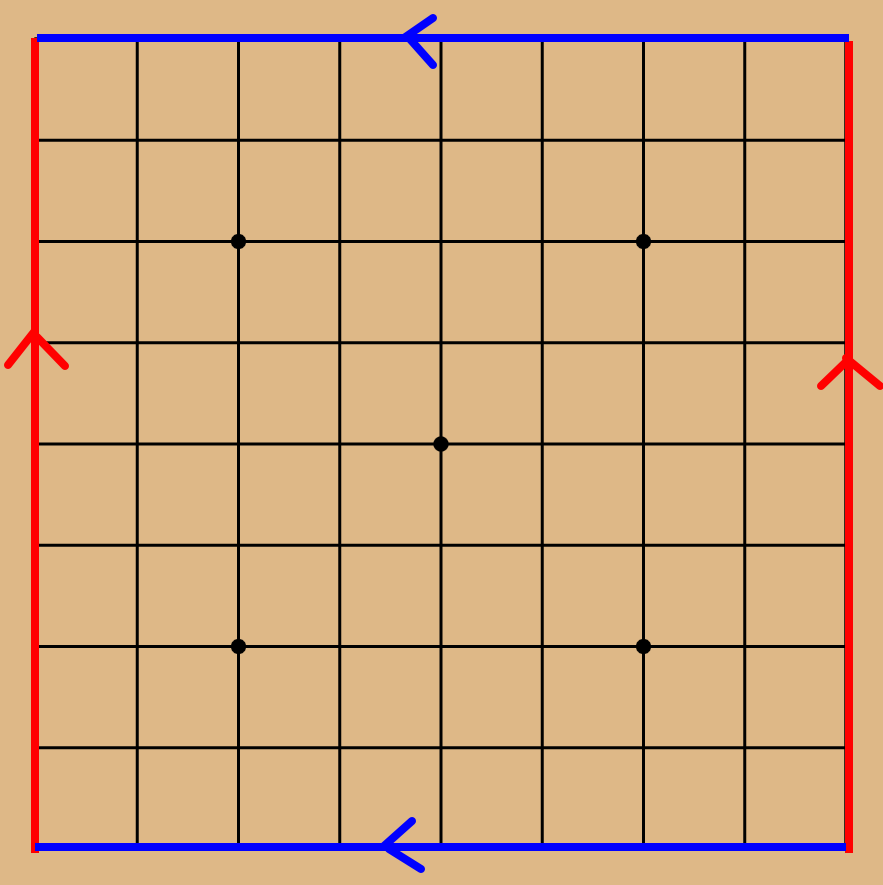
Toroidal go is a commonly played variation, in which the board 'wraps around' horizontally and vertically: the upper and lower edges are connected, and so are the left and right edges. Every point on the board touches exactly four other points. For instance, the top-left corner is connected to the point below it, the point to its right, the bottom-left corner, and the top-right corner. This is equivalent to playing on the surface of a torus.
 |
 |
|---|---|
| A torus. | Toroidal go: pairs of edges of the same color are connected to each other, and the parallel arrows indicate that directions do not change in the transition. |
There are two ways to draw a nontrivial loop (i.e. a closed path that cannot be shrunk down to a point) on a torus: either go around the hole, or go through the hole. These correspond to the two ways to make loops of stones on the board: vertically and horizontally.
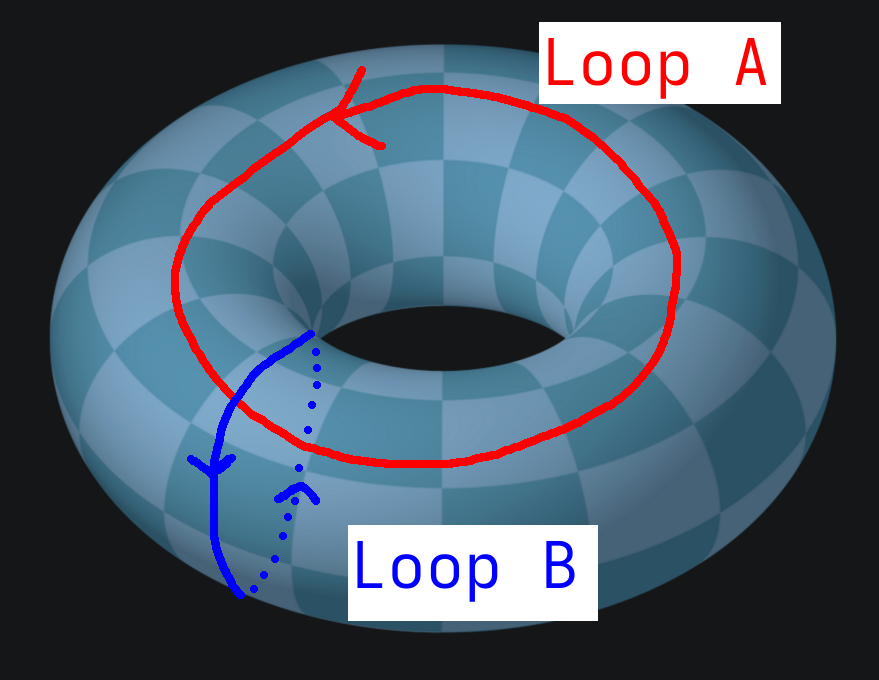
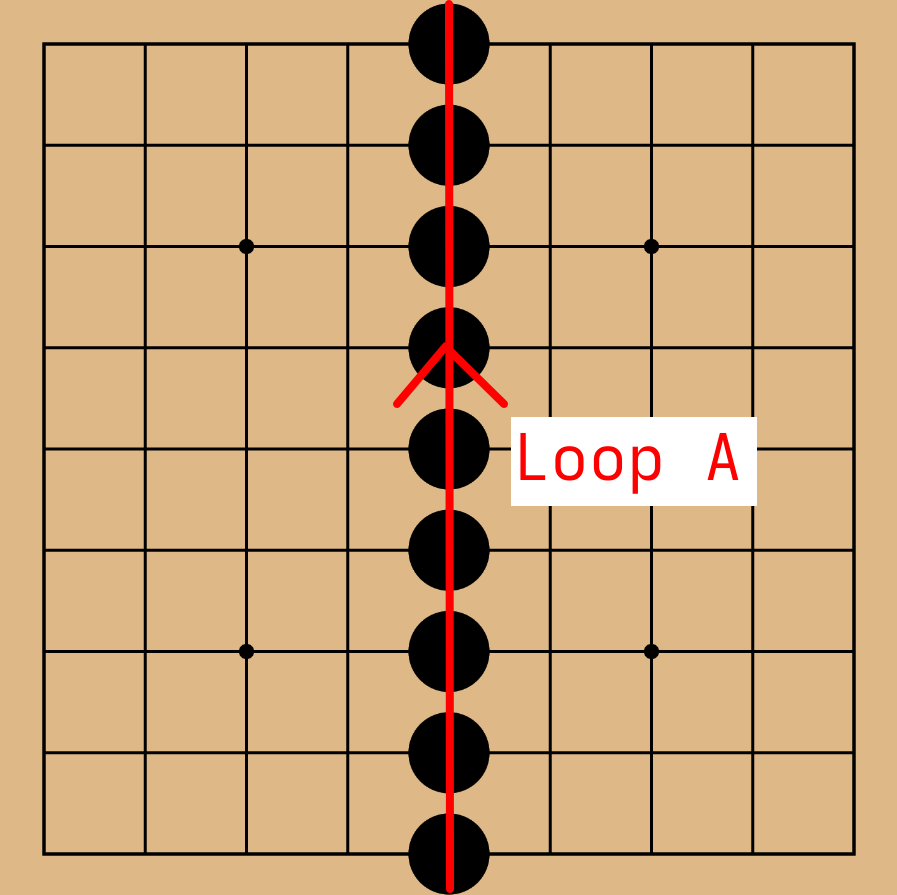
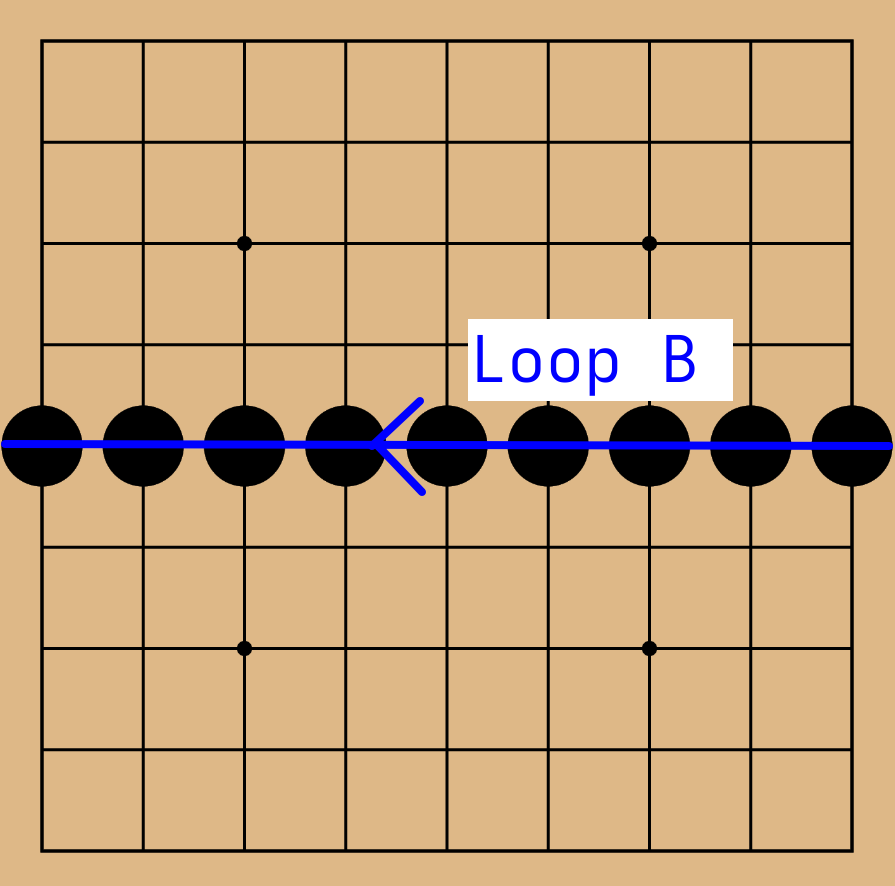
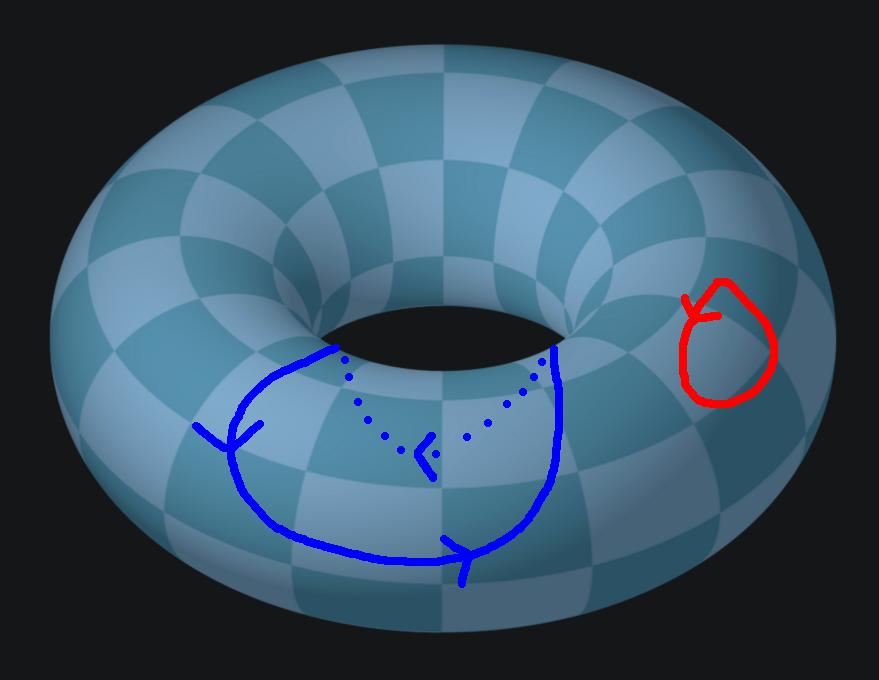
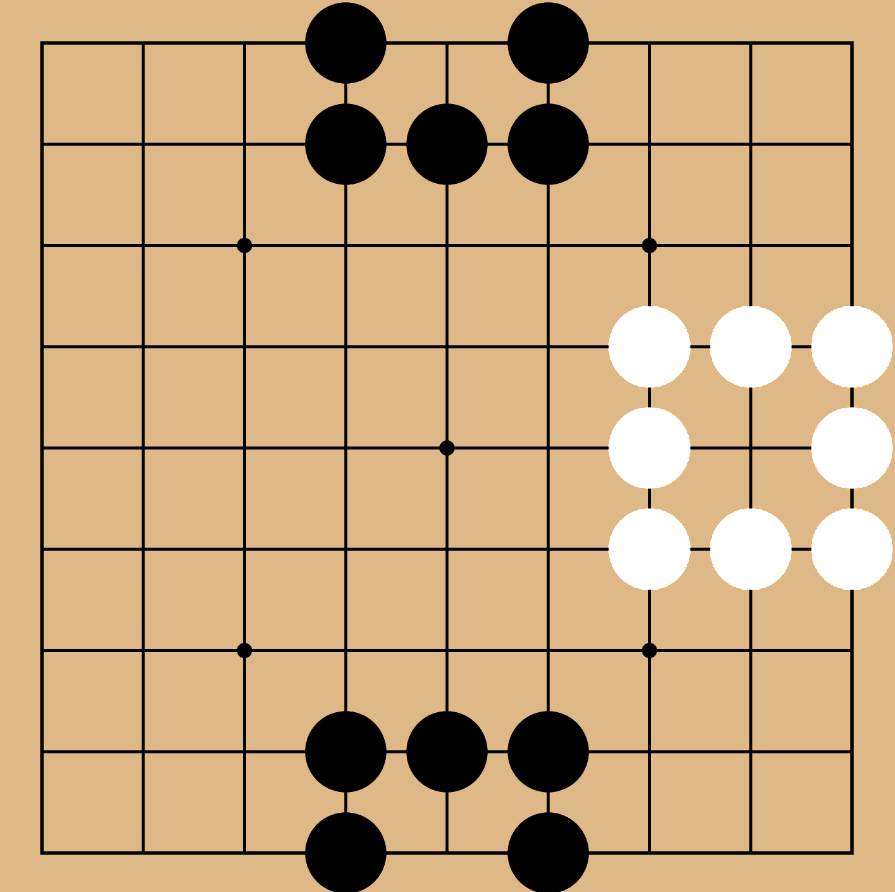
On their own, these loops do not create eyes or enclose any territory. Stones surrounding eyes or areas of territory on the board correspond to trivial loops on a torus, which do not surround or incorporate the hole.
 |
 |
|---|---|
| Two trivial loops on a torus. | Two examples of enclosed territory/eyes in toroidal go. |
For more on toroidal go, see its article on Sensei's Library.
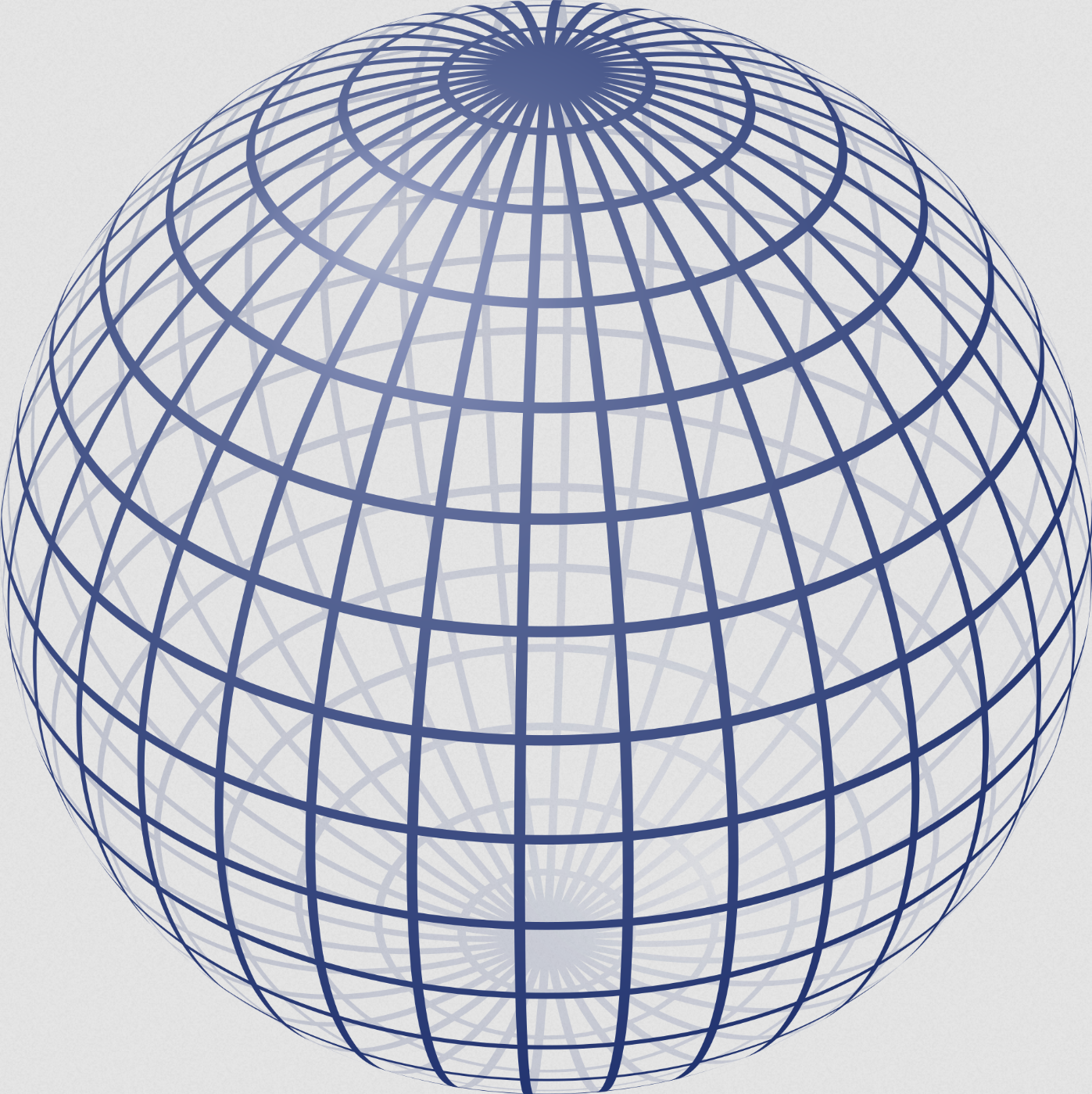
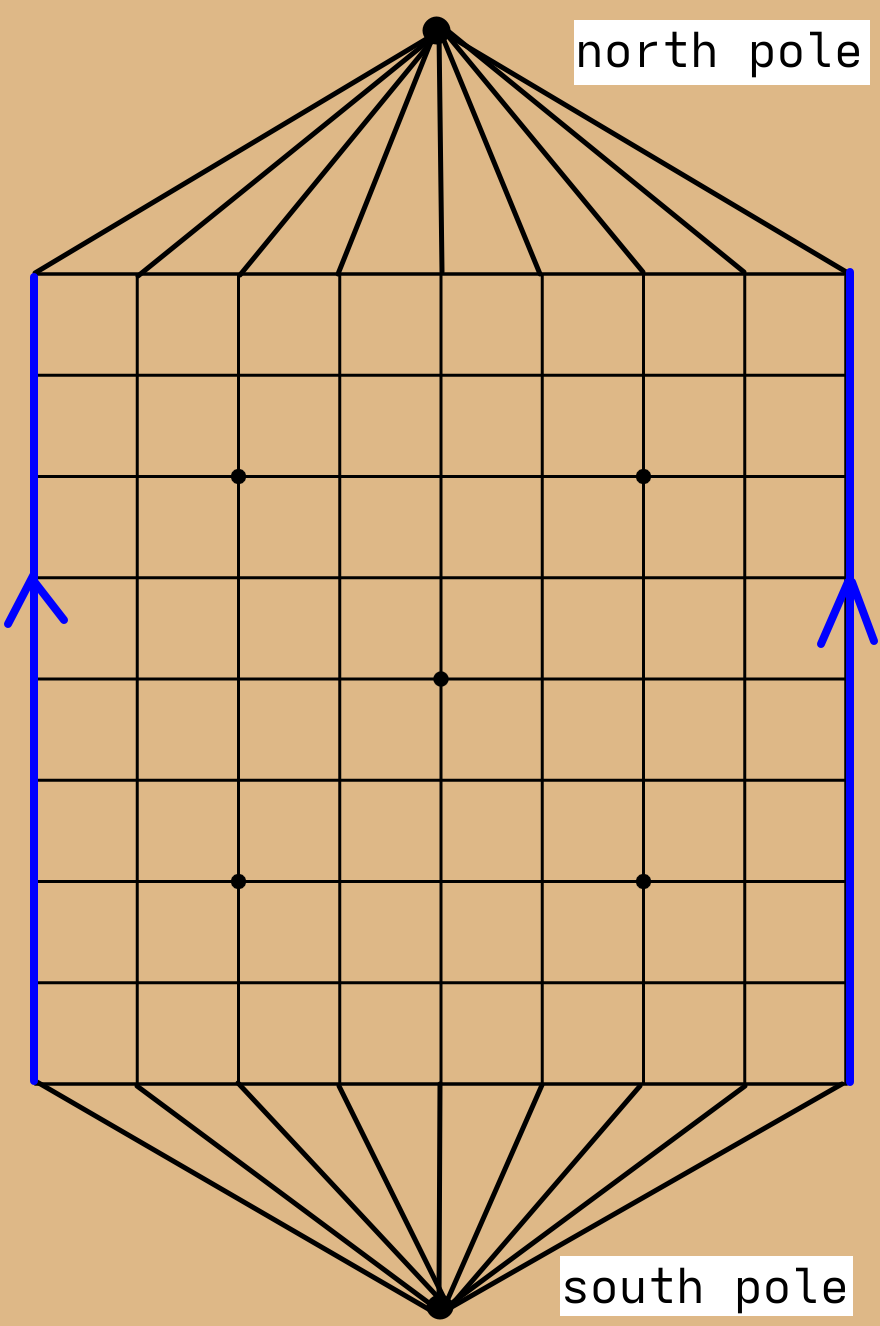
The surface of the Earth is made into a grid using two types of lines: lines of latitude run East-West, forming a series of parallel circles that band the globe; while lines of longitude run North-South, all converging at the poles. If we use this system as inspiration, we end up with a board where the horizontal lines wrap around, as in torus go, but the vertical lines all converge at special points corresponding to the North and South Poles. Every point on the board has four neighbors, except the pole points, which have as many neighbors as there are vertical lines on the board.
 |
 |
|---|---|
| A sphere with a latitude-longitude grid. | A sphere go board. |
On an ordinary go board, each of the four edges is as wide or long as the rest of the board. In spherical go, each of the two edges is only one point wide. The pole points are still edges, though, meaning they can serve as one of a boundaries for an area of territory. All loops on a sphere are trivial, so, unlike in toroidal go, a horizontal loop of stones across the board does enclose territory and have one eye.
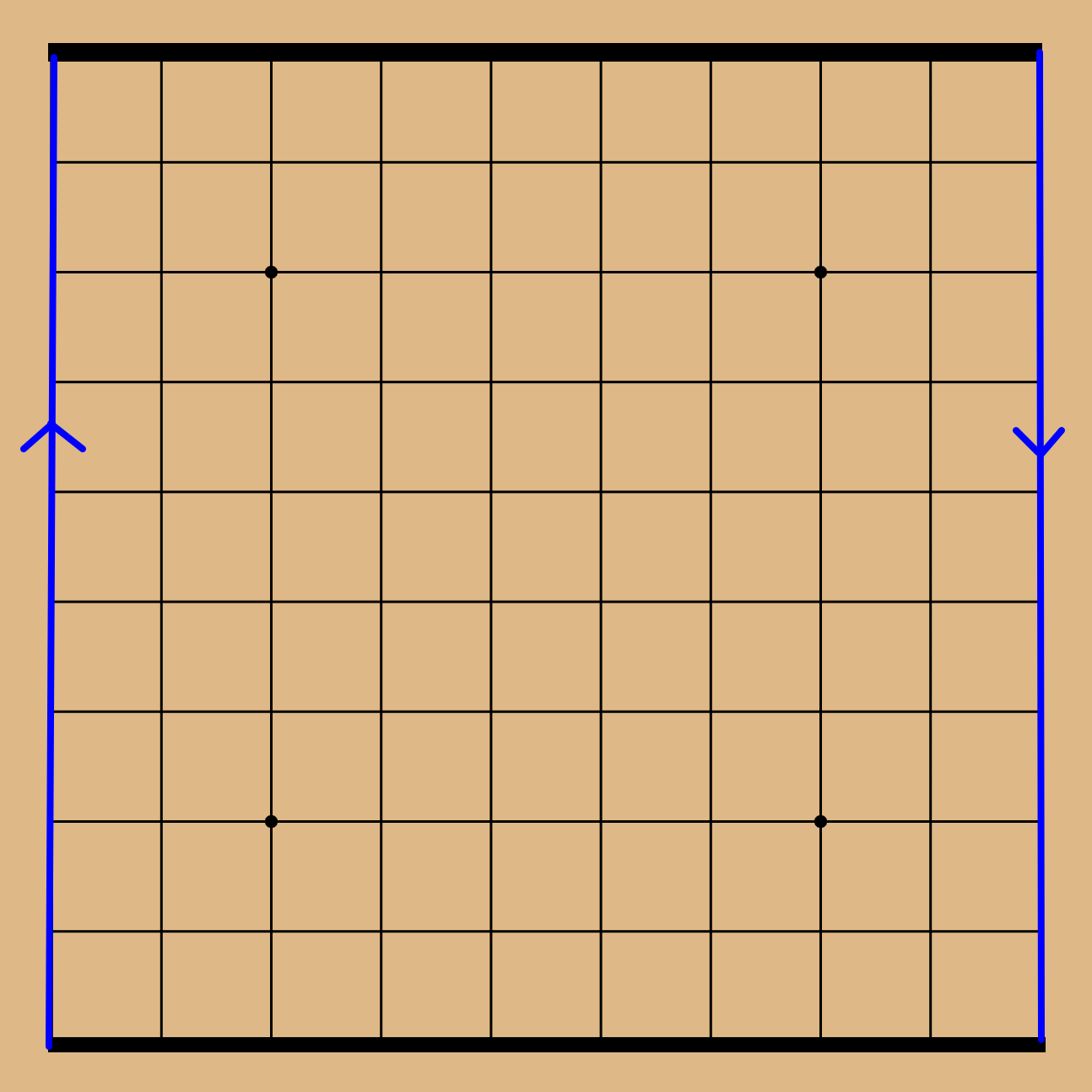
A Möbius strip can be formed by gluing two opposite sides of a rectangle together after twisting one of them 180 degrees. This translates quite easily to go boards: the top and bottom edges remain edges, while the left and right sides are connected in opposite directions, so that the top-left corner is connected to the bottom-right, and so on.
 |
 |
|---|---|
| A rectangle being bent into a Möbius strip. | Möbius strip go: there are two hard edges, and two connected edges running in opposite directions. |
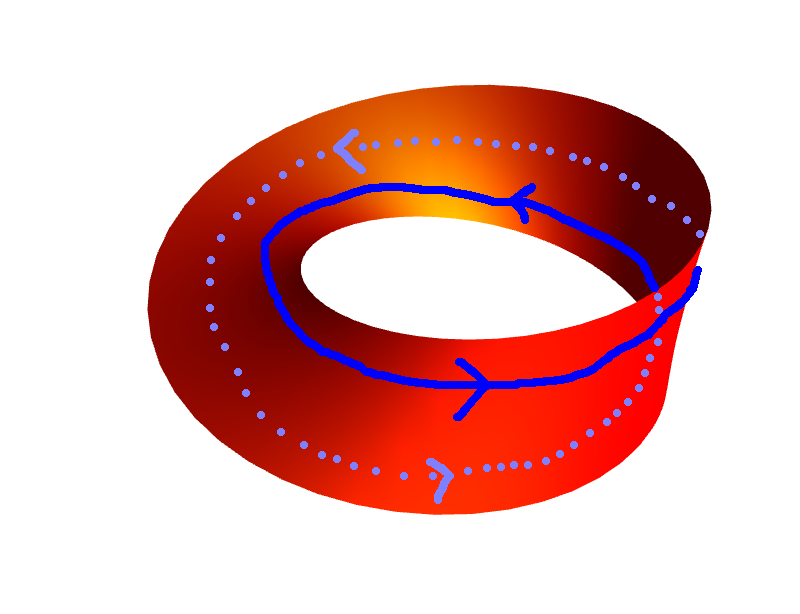
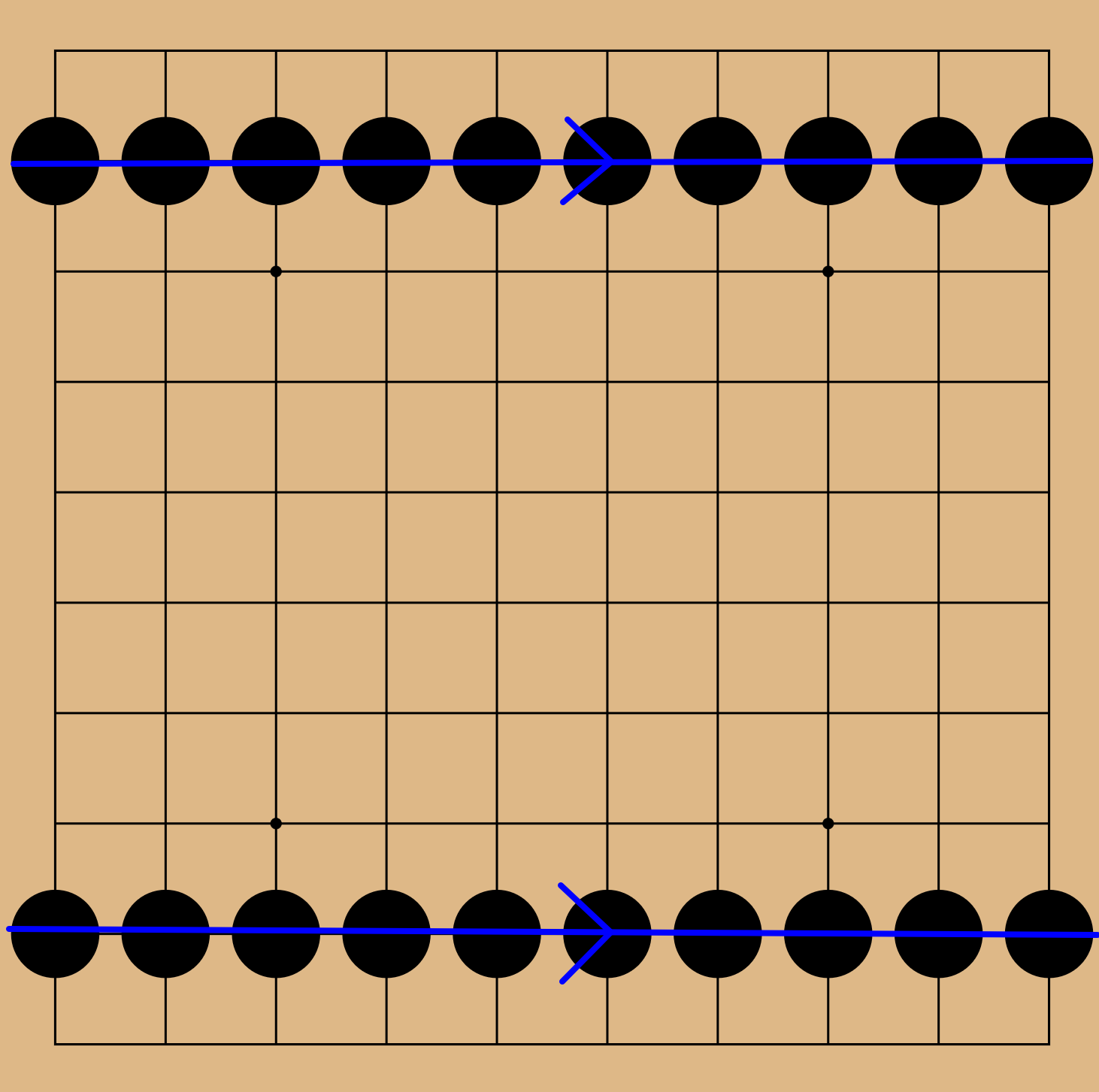
A loop in Möbius strip go is ordinarily twice as long as a loop in toroidal go on the same board size—it must cross the board twice. A loop on the center line of the board, however, would only need to cross the board once, since the center line loops back to itself. To avoid this, we can simply use a board without a center line, i.e. one with an even number of lines (the one above is 10x10). These nontrivial loops do create eyes and enclose territory on a Möbius strip board, since there is a hard edge on either side to form the other boundary of the eye/territory. Points in Möbius strip go have either 4 (non-edge) or 3 (edge) neighbors.
 |
 |
|---|---|
| A loop on a Möbius strip. | A loop in Möbius strip go. This group has one eye and encloses 20 points of territory. |
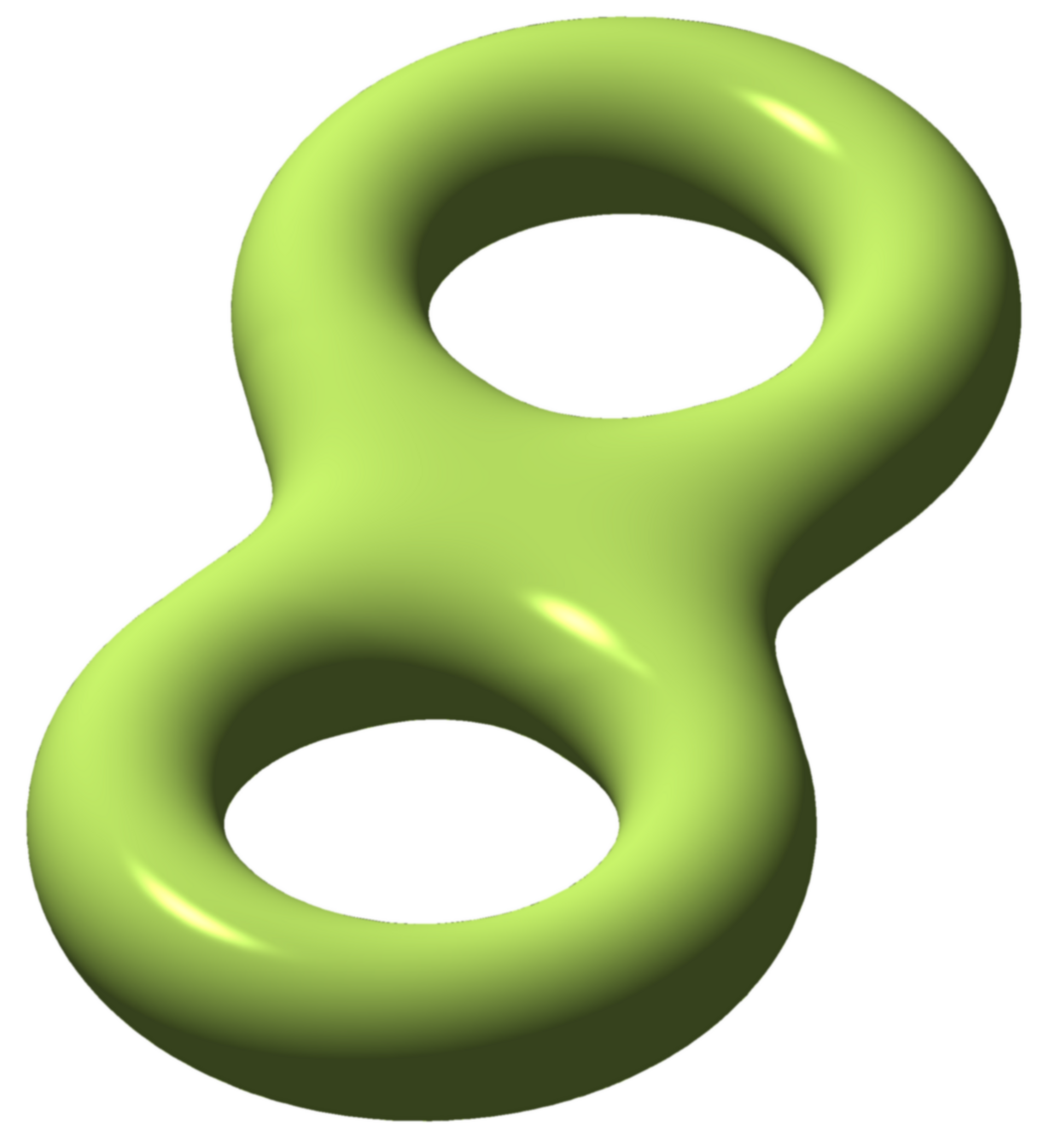
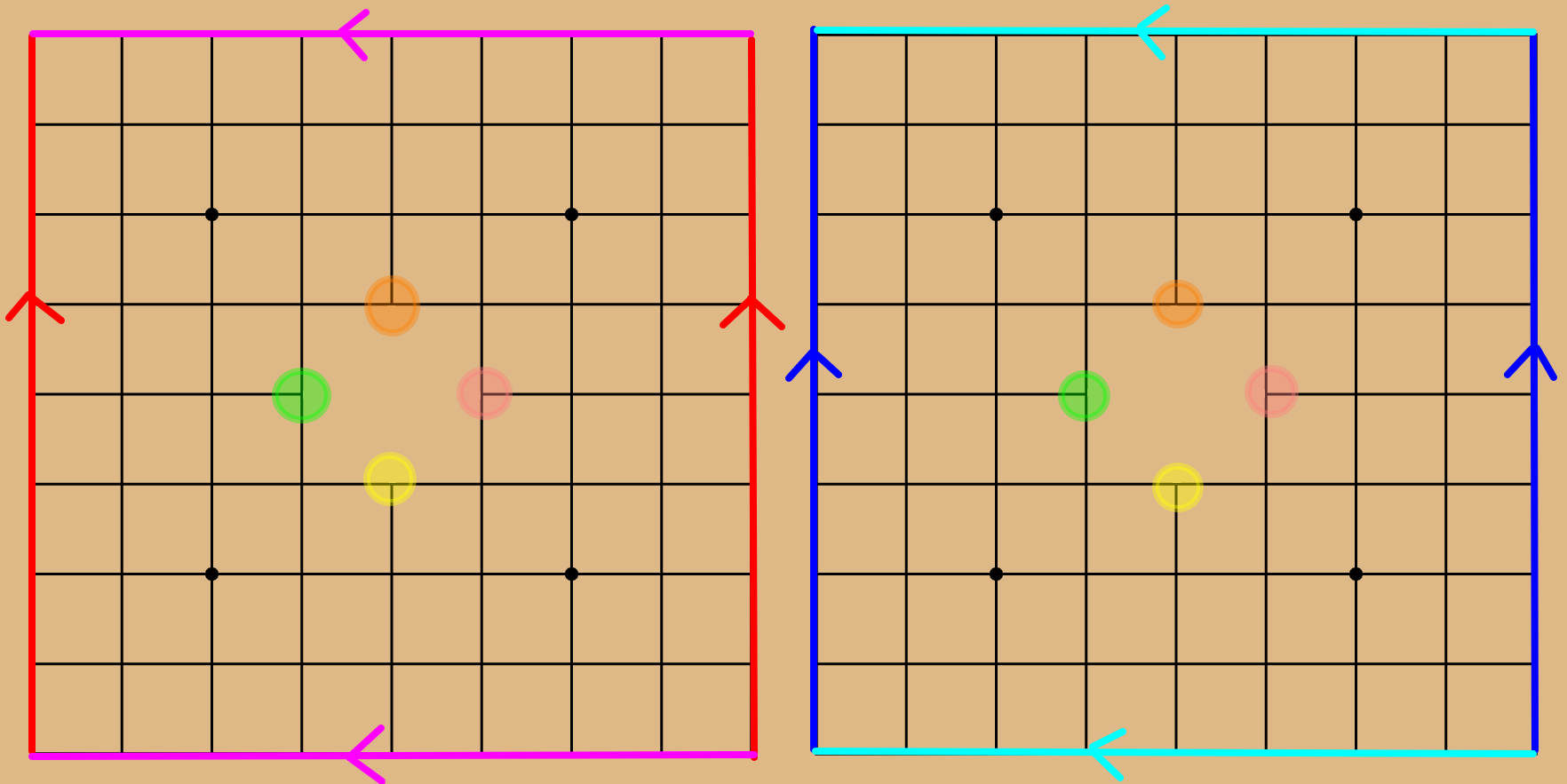
A double torus (or, more technically, a sphere with two handles) is a surface similar to a torus, but with two holes instead of one. It can be formed by cutting holes in two tori and gluing the holes together. We can create a double torus go board out of two single torus go boards by the same process: tengen is removed from each board, and the voids left behind are connected to each other, so that a stone placed next to the tengen-void on one board has a liberty at the same spot on the other board. Every point has exactly four neighbors.
 |
 |
|---|---|
| A double torus. | Double torus go: each marked point neighbors the marked point of the same color on the other board. |
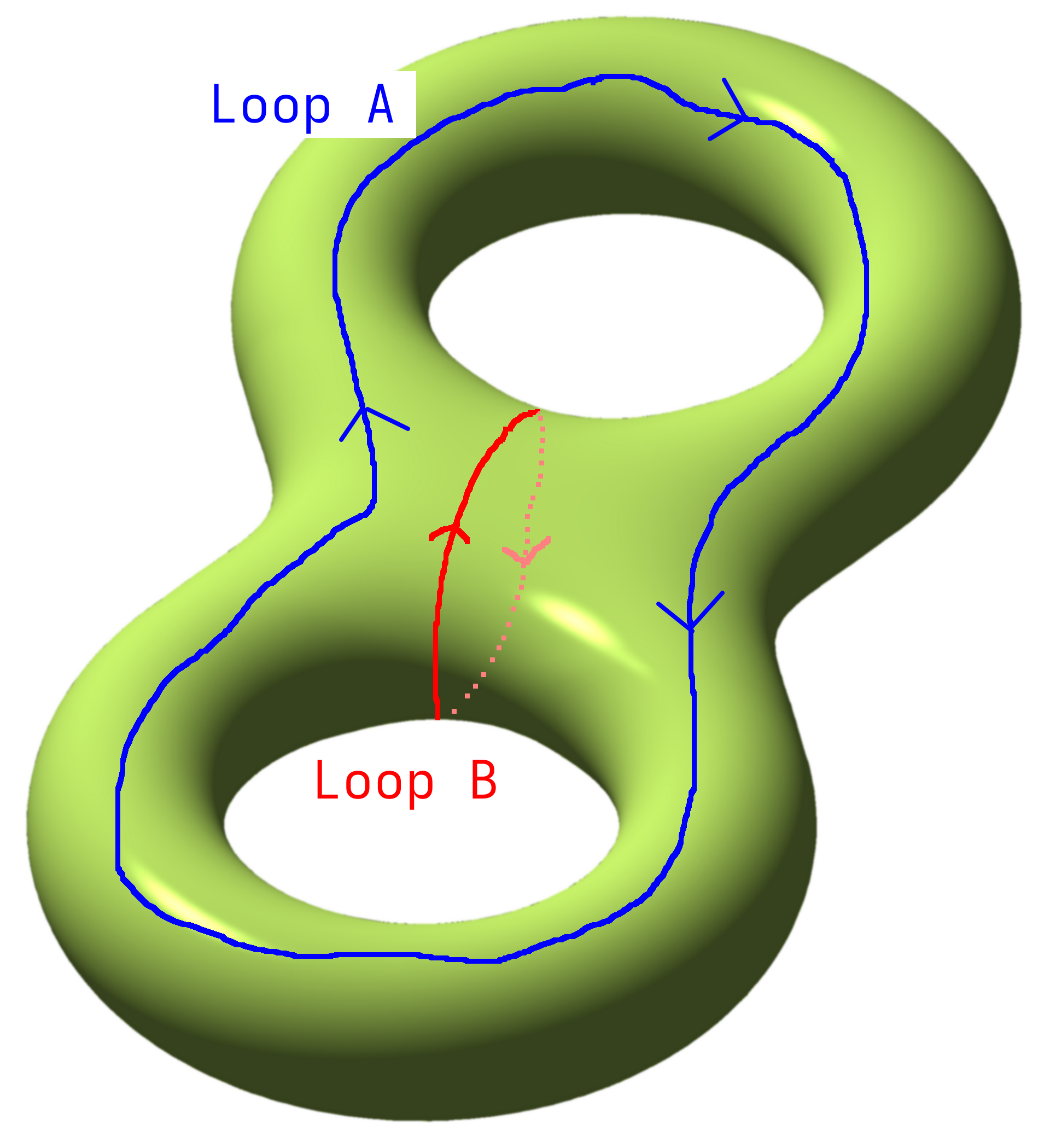
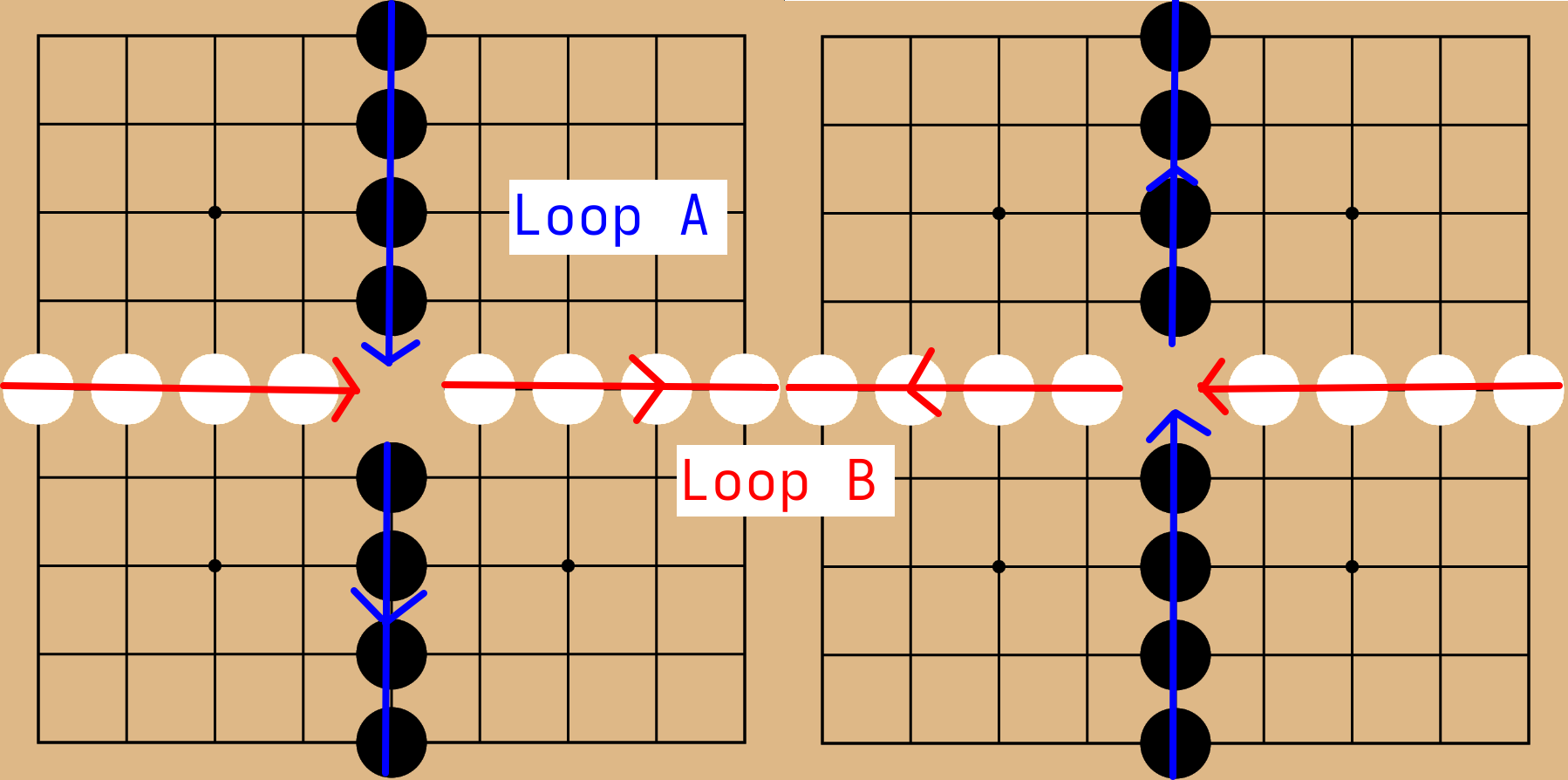
There are six ways to make a nontrivial loop on a double torus. Four of them are very similar to the nontrivial loops on a single torus: around each hole and through each hole. The corresponding loops in double torus go are the horizontal and vertical loops across each board—very similar to the loops of single-toroidal go. The other two ways are to go around both holes or to go through both holes. Their go equivalents make use of the connection between the two boards:
 |
 |
|---|---|
| The final two nontrivial loops on a double torus. | The equivalent loops on a double torus go board. |
Somewhat counterintuitively, the holes on a double torus go board do not correspond to the holes on a double torus. Instead, they represent the site where two tori are joined to form the double torus. As in toroidal go, a trivial loop is needed to form territory or eyes.